Monday, 21 September 2020

Deep Brain Stimulation For Parkinson's Disease – To Do Or Not To Do?

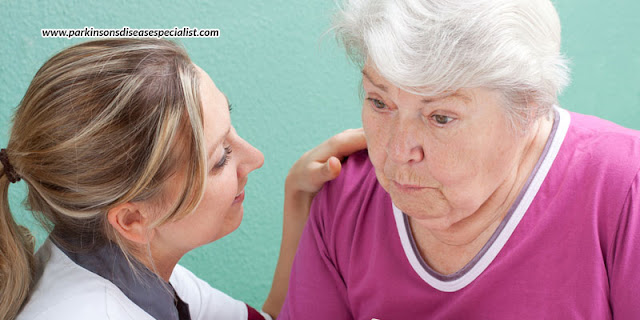
 Parkinson's Disease is a movement disorder dating back to as far back as 12th century BC. But, it only came to be known better after James Parkinson's described the disease, which is why the name. Parkinson's Disease affects both men and women, most commonly after the age of 60. But, there are cases where younger patients also experience the disorder. You must thus be on the lookout for the symptoms, and immediately get in touch with a professional to identify the problem and suggest you an appropriate treatment. Although there is no permanent cure for Parkinson's Disease, yet there are a number of medications, therapies, and other treatments that can help alleviate the symptoms and bring relief, even though temporary.

Deep Brain Stimulation for Parkinson's in UAE

What symptoms are associated with Parkinson's Disease?

Let us first understand the most common symptoms of Parkinson's Disease so that you can identify them at the earliest and take proper action. The most common symptoms associated with Parkinson's Disease include shaking of the hands, stiffness, and slowness of movement. However, if the disorder advances, the symptoms may also include depression, urinary symptoms, and dementia.

How can Parkinson's Disease be treated?

The first breakthrough in treating Parkinson's Disease came in the 1960s with the development of Levodopa. After this, there have been many medications made available for treatment over time, but none is as effective as Levodopa. After this came the discovery of Deep Brain Stimulation, which was first described in the late 1980s, but which only got approval by the FDA in 2002. Ever since, this treatment has been in use to treat Parkinson's patients, and relieve them of most of the symptoms (even though temporarily), improving the patient’s quality of life.

What is Deep Brain Stimulation?

Deep Brain Stimulation is an invasive surgery that involves implanting a neurotransmitter into the chest area, and electrodes into a specific part of the brain, which are connected with the help of wires to provide signals from the neurotransmitter to the electrodes, such that the brain can control the movements of the body.

Should you undergo a Deep Brain Stimulation surgery?

Although Deep Brain Stimulation is approved and highly effective, having shown wonderful results in patients who have undergone it, yet we would advise you to keep it as your last choice. After all, it is a surgery that is invasive, which means permanently altering certain parts of your body. So, you must first try treating yourself with medications and therapies. However, if your symptoms are worse and are not reacting to such treatments, Deep Brain Stimulation is then your best choice. Ideal patients for the surgery are those who are suffering from Idiopathic Parkinson's Disease, and are still dopamine responsive, but are unable to take an adequate dose due to side effects; or those who have significant disabling on and off symptoms.

Are there any complications after undergoing the surgery?

Despite the fact that Deep Brain Stimulation offers wonderful results of alleviating symptoms and helping the patient to live an improved quality of life, yet it is after all an invasive surgery, which means that there are undoubtedly chances of side-effects. If there is any fault in the surgery, there could be bleeding, infection, or misplacement. Also, the surgery may result in behavioural changes, visual disturbances, disbalance, etc. in some patients. However, all these side-effects can be controlled with appropriate programming. Also, Deep Brain Stimulation is a reversible procedure, which is why most complications can be effectively controlled. So, on the whole, there should be no problem in undergoing the procedure; yet, you must always have yourself diagnosed and treated by an expert, who can help identify whether Deep Brain Stimulation is the right choice for you or not. Dr. Shivam Mittal is one such professional offering Deep Brain Stimulation for Parkinson's in UAE for a long time now, with successful results. Here, you’ll be thoroughly diagnosed to see if your condition can be treated with the help of medications and therapies; and only if not, will you be given the last option of surgery. Thus, you can rest assured that you’ll get only genuine advice and treatment at Dr. Shivam Mittal’s.

Thursday, 30 July 2020

Precautions To Be Taken During The Pandemic By Parkinson’s Disease Patients

Covid-19 is one of the most dreadful diseases today. It is a virus that brings cough, cold, fever, and breathlessness. All in all, it is a respiratory disorder affecting the lungs, choking them so bad that it may even lead to death. Moreover, the virus is more likely to affect those who are suffering from other illnesses too, and are low on immunity levels. This clearly proves that a major sector of the population that can be affected is the senior citizen age group. Hence, senior citizens are the most vulnerable to the virus.

Parkinson's Disease Treatment in UAE

Since most Parkinson's Disease patients are in their senior years, we would want each one to be prepared for both Parkinson's Disease and Covid-19.

  • Seniors are the most at risk to develop the symptoms of Covid-19, which can lead to the development of pneumonia. This is why it is important that senior consider getting the pneumonia vaccine as soon as possible.
  • As we know, the virus spreads from person to person. Senior citizens must thus try to stay as much isolated as possible. Staying within their own room, away from other family members, or any guests that visit is a wise decision. Also, senior citizens must try as much as possible not to move out of home, no matter what. And, those senior citizens who live in communities or assisted living centers must avoid communal rooms, and also sanitize often.
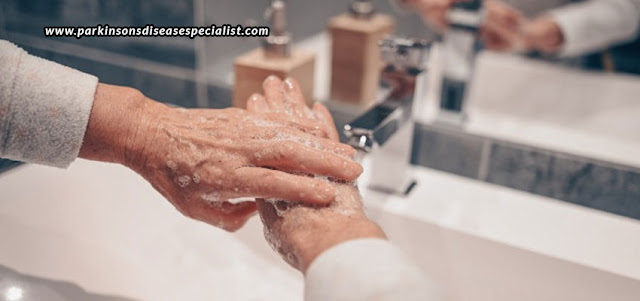
  • Sanitization during the pandemic involves washing hands with soap and water often; or at least using a sanitizer, especially when having touched people or objects. The best sanitizer to be used is one having at least 60% alcohol.
  • In case senior citizens have to move out of home, they must limit their outdoor time, and while they’re out, they must wear a mask or cloth face cover at all times. Also, when they need to use a seat, table, or vehicle, they must sanitize the place thoroughly before using it.
  • With Parkinson's disease, it is really difficult to move, let alone going out of the house every now and then. And, with the virus being spread so quickly, it becomes even more important to move out once and stock up on essential supplies for the entire month, or at least a fortnight. In fact, we’d suggest you have a friend or neighbor do the shopping for you. Or, you could have a home delivery system in place from the grocer or online.
  • Whether indoors or outdoors, make it a practice to social distance, that is, stay at least 6 feet away from others. Also, avoid any kinds of crowded places, whether it is a market, or a gathering at home.
  • As a Parkinson's Disease patient, you may have a list of medications to take every day. But, instead of going to the medical store every now and then, it is advisable to stock up on your medications at one time. However, if you do have to reorder, try doing so over the phone or online for home delivery.
As a Parkinson’s Disease patient, you may also have to make regular visits to your doctor. So, while you do so, you’ll have to take all the above mentioned precautions in order to stay safe. Keep your face covered, keep yourself at a safe distance from others, and keep yourself and your surroundings well-sanitized. However, if you are being treated under the guidance of Dr. Shivam Mittal, he will make sure that you don’t come to the clinic, unless really very necessary. So, when you are getting Parkinson's Disease treatment in UAE at this clinic, you can rest assured that you are in safe hands.

For more information, visit our website: https://www.parkinsonsdiseasespecialist.com/

Wednesday, 15 July 2020

The Different Brands Of Botulinum Toxin

Since more than three decades, Botulinum toxin has been used to treat several neurological conditions such as cerebral palsy, dystonia, essential tremor, Parkinson's disease, spasmodic torticollis, and other movement disorders. It is a product that if formed by the bacteria Clostridium botulinum (thus the name).

Different Brands Of Botulinum Toxin

Tuesday, 18 September 2018

Parkinson's Disease And Women

Women are the most vulnerable populations that are attacked by Parkinson's disease. Patients with this ailment are in themselves physically, mentally, and socially vulnerable. But, when women have a shortage of healthcare professionals or supplies in their area, or face healthcare failures, or have other personal barriers like socio-economic status, cultural differences, and linguistic differences, they are even more vulnerable. Moreover, it has been researched that women with Parkinson's do not receive the same care or advocacy as men or children who face the same ailment.

 Movement Disorders

Monday, 27 August 2018

What Are The Risks Associated With Parkinson's Disease?

When there is very less or no production of dopamine in the nerve cells, it means that they are damaged, which affects the functioning of the entire nervous system. This results in problems in an individual’s ability to move or balance himself. This disorder is known as Parkinson's disease. What causes this disorder is not yet known, which is why there has been no sure shot way of eliminating this ailment too. However, there are certain treatments that can alleviate the associated pain and discomfort. These could be oral medications, physical therapies, botulinum toxin injections, or deep brain stimulation surgeries. When you approach a Parkinson's disease specialist in Bangalore, one like Dr. Shivam Mittal, you will be given such treatments, but appropriate ones, after a complete diagnosis of your condition is done. However, while the pain and discomfort associated with Parkinson's can be alleviated through these treatments, there are certain risks that still remain associated with Parkinson's. These include –

 Parkinson’s disease specialist

Tuesday, 14 August 2018

How Can Art Therapy Help Deal With Parkinson's?

With science and technology constantly changing, scientists and researchers are always looking for newer and better ways to treat ailments – better ways to treat older ones, and innovations to treat new unknown ailments. Just recently, top Parkinson's experts from around the world gathered at the Parkinson's Foundation-designated Center of Excellence, where a presentation on art therapy was revealed. Led by art therapist and consultant, Kimberly Faulkner, the presentation depicted how art therapy can alleviate discomfort caused by Parkinson's.

About Parkinson Disease

Monday, 30 July 2018

Do You Need A Neurologist Or A Movement Disorder Specialist?

Specially trained movement disorders specialists are different from other neurologists. These specialists offer treatments that are different from those offered by neurologists. You can say that movement disorders specialists are advanced neurologists who after studying neurology, go in for an additional one or two year course, where they learn in depth about different types of movement disorders – their symptoms and cures. Dr. Shivam Mittal is one such movement disorders specialist in Bangalore, who has completed his education in neurology from one of the top institutions in USA, under the mentorship of legends in neurology. He was then accepted for super specialty training in Parkinson's disease and movement disorders at the Mayo Clinic, and postdoctoral fellowship in Botulinum toxin treatment at Yale University in USA. Thus, when you suffer from any kind of movement disorders like Parkinson's disease, tremor, dystonia, acute stroke, epilepsy, trigeminal neuralgia, occipital neuralgia, multiple sclerosis, Alzheimer’s disease, and the like, you can completely rely on Dr. Shivam Mittal to provide you with the finest treatment.

 Movement disorders specialist in Bangalore